

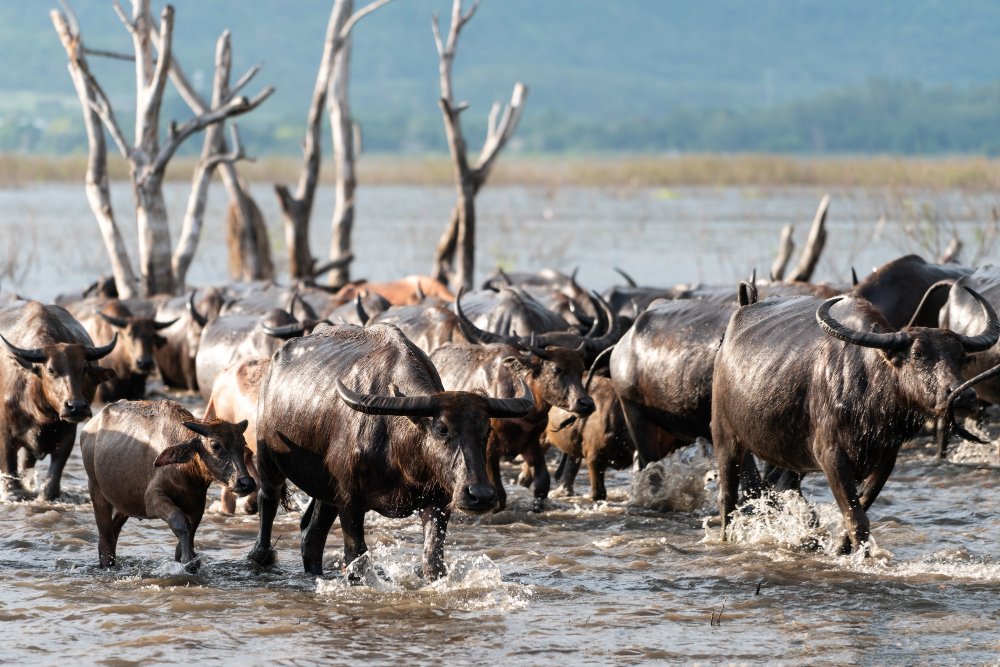
In late July, the plains of the Maasai Mara usually feel charged, like a gathering crowd before a long‑anticipated performance, yet this year the grass lay unusually calm, and the air carried an absence that seasoned guides struggled to explain without pausing mid‑sentence.
Like a swarm of bees reacting instinctively to changes in light and scent, the Great Migration has been moving with the predictability of a living calendar for decades, with each season triggering the next as rainfall patterns pushed over a million animals northward, step by step.
| Aspect | Details |
|---|---|
| Typical migration flow | Serengeti (Tanzania) to Maasai Mara (Kenya), clockwise loop |
| Animals most affected | Wildebeest, zebras, gazelles, eland |
| Usual peak period | July to October |
| Main disruption drivers | Fencing, infrastructure, erratic rainfall, habitat fragmentation |
| Scale of decline | Nearly 90% reduction in Kenya’s migratory footprint since 2020 |
| Current concern | Wildebeest shifting from migratory to resident behavior |
In 2026, that instinct faltered.
Rangers began noticing it first through numbers, not drama. Long stretches of land where thousands should have been grazing but weren’t, leaving only flattened grass and unsolved questions, followed by a few missing herds here and smaller crossings there.
By early August, it became notably clear that the movement into Kenya was not merely delayed. The wildebeest were staying put, clustering farther south, behaving less like travelers and more like settlers.
The most decisive factor lies in the ground itself. In recent years, fencing has proliferated throughout Narok County in patterns that are remarkably similar to suburban growth elsewhere. Each fence silently undermines generations of inherited movement by dividing once-open rangeland into controlled parcels.
Migration corridors are not lines on a map; they are memories passed down through hooves. When those paths are blocked repeatedly, animals adapt, abandoning routes that no longer reward effort, a response that is both remarkably effective for survival and devastating for long‑term ecological balance.
Researchers tracking movement data now estimate that the Kenyan portion of the migration has been significantly reduced, shrinking by close to 90% since 2020, with some areas seeing wildebeest numbers fall from six figures to mere tens of thousands.
The disruption has been intensified by climate patterns. Over the past decade, rainfall has grown less predictable, stretching rainy seasons and blurring the signals that once told herds when to move. When grass remains green in the Serengeti longer than expected, urgency dissolves.
This year’s prolonged rains removed the pressure to cross north, effectively convincing the herds that waiting was safer than risking unfamiliar barriers, a decision that appears logical when viewed through the lens of survival.
Habitat quality has also declined quietly but steadily. Land subdivision that began in the 1980s fragmented grazing areas, and without the ability to roam widely, animals are now forced to remain in tighter spaces, overusing limited forage and stressing both land and livestock.
Tourism, often described as conservation’s ally, has added its own complications. During peak season, the Mara River becomes crowded with vehicles positioned like spectators around a stadium, engines idling, radios crackling, patience thinning.
Guides describe crossings delayed for hours as animals hesitate at the water’s edge, unsettled by noise and motion. Some turn back, others scatter, disrupting behavior that once unfolded with precise timing.
Watching one such stalled crossing, I caught myself wondering when hesitation replaced instinct so completely.
Claims that certain lodges or developments are obstructing corridors have been refuted by wildlife authorities, who emphasize that migration occurs across a wide border zone rather than a single path. They contend that their data is remarkably clear.
Yet conservationists counter that the issue is cumulative. One fence might be navigable, one road tolerable, one lodge acceptable, but together they form a maze that migration was never designed to solve.
The shift from migratory to resident behavior is perhaps the most concerning outcome. Wildebeest are adapting by staying in one place year‑round, a strategy that may seem practical now but undermines the ecological rhythm that keeps grasslands healthy and predators balanced.
This change has ripple effects. Lions modify their hunting range. Patterns for grass regrowth change. Local communities that rely on predictable wildlife movement for tourism income face uncertainty that is surprisingly affordable for developers to ignore but costly for everyone else.
Encouragingly, there are early signs of response. Through strategic partnerships between conservation groups and landowners, some fences are being removed, corridors reopened, and compensation models tested to make coexistence financially viable.
These efforts are notably improved compared to past initiatives, focusing less on enforcement and more on collaboration, recognizing that sustainable conservation must also support human livelihoods.
However, recovery won’t happen right away. Migration routes are learned behaviors, not switch‑activated responses. Even if barriers disappear tomorrow, it may take years for herds to relearn trust in open land.
Still, optimism persists among ecologists who see resilience in the system. When given room, grasslands recover rapidly. Animals, when given a choice, often choose movement.
The Great Migration has always been a story of adjustment, shaped by rain, predators, and terrain. The speed at which human choices are changing that narrative is what feels different today.
The outcome of this migration in the years to come will depend on whether conservation and development can cooperate instead of diverging like mismatched currents.
If corridors are restored and pressures eased, the herds may yet return to their ancient rhythm, reminding us that postponement is not the same as disappearance, and that motion, once remembered, has a way of finding its path again.
Disclaimer
Nothing published on Creative Learning Guild — including news articles, legal news, lawsuit summaries, settlement guides, legal analysis, financial commentary, expert opinion, educational content, or any other material — constitutes legal advice, financial advice, investment advice, or professional counsel of any kind. All content on this website is provided strictly for informational, educational, and news reporting purposes only. Consult your legal or financial advisor before taking any step.
