

Joe Pantoliano walks inside Wonder Man as though he has nothing to lose and plenty to prove. His rendition of “Joe Pantoliano” is a lighthearted satire on the concept of celebrity itself, not merely a cameo. Set in a luxurious Malibu property he doesn’t actually own, he delivers a performance that pokes fun at his career with a grin that’s impossible to look away from.
By mixing satire with sincerity, Pantoliano produces something surprisingly lasting. He plays an inflated version of himself—an actor caught in competition with Trevor Slattery, played by Sir Ben Kingsley, from their fictional history on a soap opera. The energy is fresh, mixed with old-school swagger and new-age ridiculousness.
At one point, he says, “I would have been knighted if I were British,” and then he looks directly at Kingsley. It’s very similar to something his real self might say at a packed industry lunch—and he penned the line himself. That minor bit is really illuminating. It wasn’t crafted by a Marvel scriptwriter. It originated with Pantoliano, who wished to contribute to the bittersweet dance of almost becoming famous.
Over the past few years, Marvel has increasingly embraced meta-commentary, and casting Pantoliano feels especially pertinent. He’s the kind of performer who’s been around long enough to have stories that outlast studio trends, yet he’s rarely handed the stage to talk freely. Here, he’s not just handed the mic—he’s rewriting the monologue.
| Name | Joe Pantoliano |
|---|---|
| Born | September 12, 1951, Hoboken, New Jersey |
| Known For | The Sopranos, The Matrix, Memento, Bad Boys |
| Role in “Wonder Man” | A satirical version of himself, rival to Trevor Slattery |
| First Appearance | Episode 2 of Wonder Man (2026, Disney+) |
| Notable Feature | Wrote his own fourth-wall-breaking line |
| Reference | ScreenRant – Wonder Man Cameo Explained |
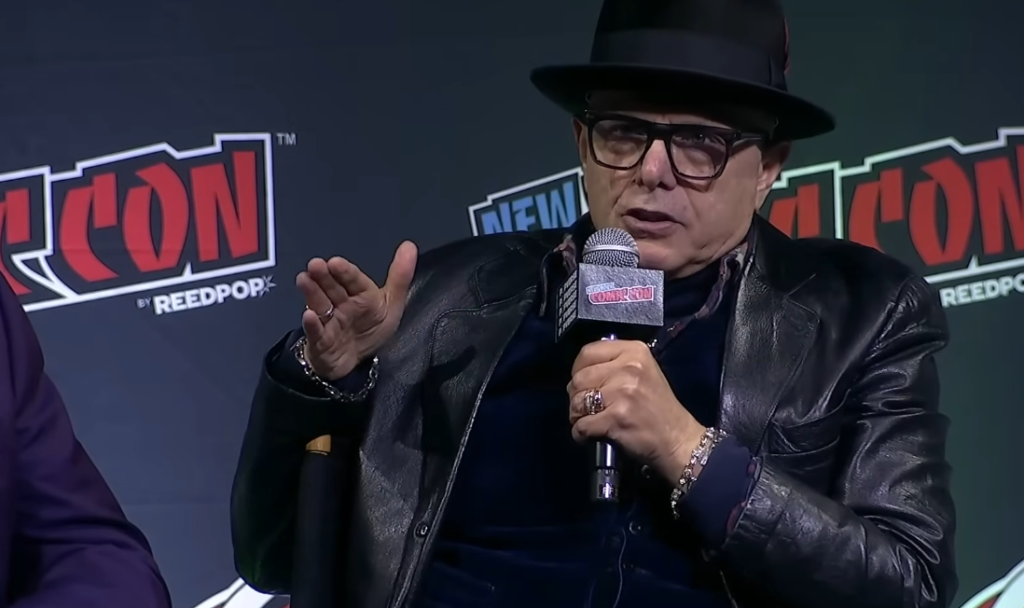
From The Matrix to The Sopranos, his characters have always had grit. But in Wonder Man, that hardness is smoothed into self-aware hilarity. His character flaunts his profession like a dated resume, name-dropping and posturing with just enough irony to make it amusing. Beneath the humor, however, is a blatant reference to the underappreciated importance of perseverance.
This isn’t a slapstick walk-on. His moments are carefully placed at the beginning and end of the series, serving as bizarre bookends to Simon Williams’ own wild trip. Pantoliano is the live recollection of what it is to battle for relevance—not with desperation, but with edge.
By engaging closely with series creator Andrew Guest, he was allowed latitude to determine the tone of his lines. His performance has a looseness that doesn’t feel like Marvel at all because to that incredibly successful collaborative approach. It reminds me more of HBO having a good time in a spandex suit.
The dynamic between Pantoliano and Kingsley is very evident. Both men know what they’re doing. They are removing the curtain from a machine they have operated for decades, not making fun of themselves out of resentment. This level of clarity is exceedingly rare in a genre that generally hides behind pyrotechnics and CGI trickery.
For younger viewers, Pantoliano can just look like a goofy man from a forgotten show. However, his presence reveals depths to devoted followers. He is alluding to projects that the majority of Hollywood has already put on hold. And yet, there he is—center frame, sharp as ever, playing himself better than any casting agent ever could.
What’s particularly innovative is the way Wonder Man lets these legacy actors confront their legacies without begging for nostalgia. Pantoliano doesn’t need to be remembered fondly. He needs to be seen honestly. And that kind of portrayal—funny, imperfect, passionately intelligent—is exactly what gives his cameo enduring force.
For those who remember Ralph Cifaretto, this character feels like an echo. That same untamed energy, redirected with more laughter than violence. It is the type of performance that lingers because it is very human rather than because it is loud.
Guest disclosed that Pantoliano’s scenes came together very easily throughout production. He contributed ideas, anecdotes, and a readiness to challenge the industry’s weaknesses. Because of that confidence, the show produced dialogue that feels real rather than scripted, which is different from the standard Marvel template.
What makes his entrance particularly valuable to the series is how it grounds a plot that could’ve easily spiraled into satire for satire’s sake. Instead, Pantoliano’s role serves like a mirror—reflecting the insane pursuit for stardom while reminding us that the individuals behind the characters are still chasing, still creating, constantly laughing at the turmoil.
By stepping into Wonder Man as a version of himself, he doesn’t just poke fun of the system—he shows how amusing and heartbreaking it can be to live just outside the spotlight. And in doing so, Joe Pantoliano provides one of the most startlingly honest performances Marvel has permitted in years.
Disclaimer
Nothing published on Creative Learning Guild — including news articles, legal news, lawsuit summaries, settlement guides, legal analysis, financial commentary, expert opinion, educational content, or any other material — constitutes legal advice, financial advice, investment advice, or professional counsel of any kind. All content on this website is provided strictly for informational, educational, and news reporting purposes only. Consult your legal or financial advisor before taking any step.
