

Ten years ago, the Queen Elizabeth Islands were viewed as Arctic strongholds, wrapped in thick, multi-year ice that consistently resisted even the most powerful currents. Today, a radically different picture emerges from those same coordinates: melted floes, eroded ridges, and fractured surfaces that hardly withstand passing research ships.
What scientists have found between 2020 and 2025 is equivalent to a turning point in the climate. A region that was once known as the “last ice area” is becoming less seasonal. Long-standing structures that were formerly thick enough to withstand machinery are now permeable due to changes in air warmth and maritime undercurrents, according to measurements from the Canadian Coast Guard’s Amundsen icebreaker.
This change is not hypothetical. With the smallest maximum extent in over 50 years of satellite records, the Arctic winter sea ice hit a new low in March 2025. The field reports, which describe unforeseen access to previously inaccessible areas, are what put the science into perspective, even though the numbers alone are alarming.
The rate of melting has also increased significantly. According to studies, the ice in some areas of the Canadian Arctic is melting five days earlier every ten years due to its retreat. Such compression ripples across food chains, migration pathways, and human livelihoods in the complex rhythms of Arctic ecosystems.
| Item | Detail |
|---|---|
| Location | Queen Elizabeth Islands, Canadian Arctic |
| Research Period | 2020–2025 |
| Main Finding | Ice that was once thick and multi-year is now soft, broken, and seasonal |
| Icebreaker Access | Icebreakers now reach areas once considered impassable |
| Broader Trend | Arctic warming ~2x faster than global average; some areas +7°C |
| Source Institutions | Canadian Coast Guard, NOAA, Arctic Report Card, Indigenous Sentinels |
| Sea Ice Records | March 2025 marked lowest winter maximum in 47 years |
| Cultural Impact | Indigenous communities now leading local environmental monitoring |
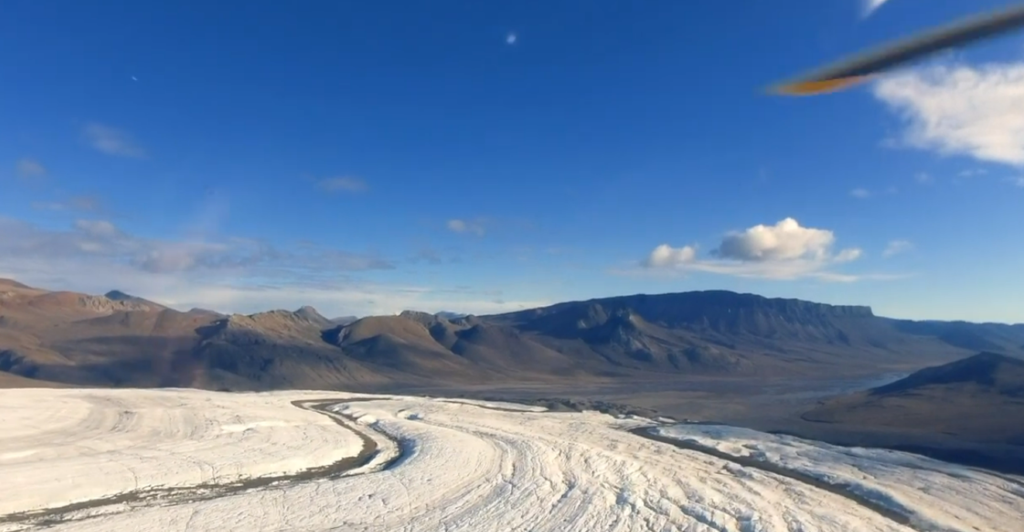
Glacier data supports the pattern throughout the region. For example, after just ten years, the Peyto Glacier in Western Canada receded by around 500 meters. Numerous other glacial bodies are experiencing a similar decrease, gradually losing their shape due to warmer air and clouds that are heavy with precipitation.
Importantly, the Arctic is warming unevenly rather than merely more. Spikes of 6 to 7 degrees Celsius over their long-term norms are occurring in several zones. Even in a single generation, these areas of rapid warming are changing our ideas of what the Arctic might look like.
One such eye-opening incident occurred when scientists, who had been prepared to expect strong opposition, saw their ship slip through a strait that had been thought to be insurmountable. I was told, half-jokingly, by an engineer that the Arctic “never budges unless it wants to.” It seems to want to now.
The research has grown extremely successful at identifying change—not just where ice melts, but also how quickly it becomes unrecoverable—by utilizing both satellite tracking and on-the-ground data. The ramifications go beyond appearances. Rust-colored rivers that were formerly trapped in frozen soil appear as permafrost thaws. This mineral spill caused one stream in Alaska’s Kobuk Valley to become so corrosive that it killed entire fish populations.
To their credit, Indigenous communities have responded with action rather than resignation. The Indigenous Sentinels Network, for instance, has created a very effective monitoring system on St. Paul Island that keeps tabs on environmental changes, such as mercury in traditional foods and coastal erosion. In addition to being accurate, this grassroots data collection is increasingly helping national research bodies that are having financial difficulties.
Additional indications of multilayer change are also present. Longer growing seasons have boosted the yield of tundra vegetation. In 2025, satellite photography revealed the third-highest levels of “tundra greenness” ever recorded. At the same time, the size and frequency of wildfire seasons have increased; in Canada’s Northwest Territories alone, almost 13,000 square kilometers burned last year.
The ocean is acting differently as well. The natural layering that formerly shielded sea ice from deeper ocean heat is being disrupted by warm, salty Atlantic seas that are surging into the Arctic. More than just a change in temperature, this “atlantification” is a structural reorganization of the marine environment that drastically changes plankton cycles and raises the risk of toxic algal blooms.
In August 2025, a landslide occurred in Southeast Alaska due to the retreat of South Sawyer Glacier. Launched by falling rock and ice, the ensuing wave surged almost 500 meters up the opposite fjord wall. It would have been disastrous if a cruise ship had been nearby, as they frequently are.
The Pacific cyclones that are now moving farther north are equally concerning. In 2025, former typhoon Halong struck western Alaska with hurricane-force winds after being fueled by abnormally warm temperatures in the Bering Sea. The hurricane was the third of its kind to hit this latitude in as many years, uprooting more than 1,500 residents and destroying infrastructure.
Some signs of resiliency are still evident despite the harm. For instance, it is now quite easy to track snowmelt. Snowpack levels in 2025 were above average in the winter but sharply decreased by June. The ground warms more quickly when that bright, reflective surface is lost, which speeds up the feedback loop that causes more melting.
At the same time, another factor has impacted the thickness of the Arctic sea ice. Ice older than four years has decreased by more than 95% since the 1980s. This is significant because older ice serves as the structural foundation of the Arctic and is more resilient to seasonal fluctuations. The loss of it makes the whole area more vulnerable.
Adaptive strategies are encouragingly developing. Communities that were hitherto thought of as passive spectators of change are now at the center of reaction activities. Their technical involvement, cultural memory, and experience are creating a narrative that is focused on survival rather than retreat.
The Arctic is no longer as far away as it previously seemed. Its shifts are felt all across the world, not only through temperature charts but also through disruptions in migration patterns, economic ripples, and geopolitical recalculations. In this way, the events that occur between Canadian ice shelves are no longer limited to a single location. It’s a test of our ability to anticipate, react, and, in the end, our willingness to alter our direction.
Disclaimer
Nothing published on Creative Learning Guild — including news articles, legal news, lawsuit summaries, settlement guides, legal analysis, financial commentary, expert opinion, educational content, or any other material — constitutes legal advice, financial advice, investment advice, or professional counsel of any kind. All content on this website is provided strictly for informational, educational, and news reporting purposes only. Consult your legal or financial advisor before taking any step.
