

A tip that something significant is concealed in a modest house, Miami heat, and tense narcotics cops are all present in the film’s opening moments. The detail—dozens of buckets filled with millions of dollars—is what draws you in, even though the stress feels genuine. Many viewers fail to recognize that this was not fiction. Yes, it did happen.
The home of marijuana trafficker Luis Hernandez-Gonzalez was raided by a team of Miami-Dade narcotics officers in 2016. Even the most seasoned officers were astounded by what they discovered. More than $22 million in cash was hidden in a secret attic room. Raw notes jammed into containers were not neatly packed in bank bricks, but rather looked like someone was hoarding sugar rather than cash.
The true-to-life basis is particularly interesting since it doesn’t rely on Hollywood embellishments—at least not initially. Officer Chris Casiano later revealed the discovery, which served as the inspiration for Joe Carnahan’s 2026 Netflix movie, “The Rip.” Even stranger was what transpired after the buckets were discovered. The officers were compelled by protocol to manually count each dollar. Two times, not once. It took 42 exhausting hours to complete, demonstrating how unprepared most departments are for a bust that size.
| Detail | Information |
|---|---|
| Film Title | The Rip (2026) |
| Directed By | Joe Carnahan |
| Stars | Ben Affleck, Matt Damon, Teyana Taylor, Steven Yeun |
| Streaming On | Netflix |
| True Story Basis | 2016 Miami-Dade drug bust |
| Real Case | $22 million cash found in Luis Hernandez-Gonzalez’s attic |
| Inspired By | Officer Chris Casiano’s story |
| Fictional Additions | Corruption, shootouts, internal betrayal |
| Core True Events | Drug raid, cash discovery, 42-hour manual money count |
| Credible Reference | https://time.com/6552382/the-rip-true-story-ben-affleck-damon/ |
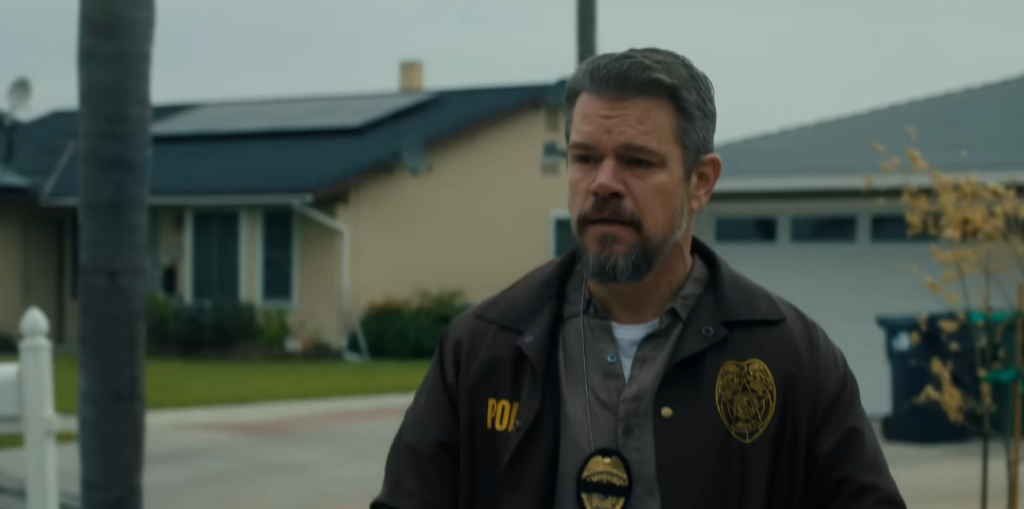
Carnahan added a lot of narrative adrenaline to his adaptation of the actual event, including internal betrayal, corruption, and a police squad that was decaying from the inside out. The truth, in which no such shady activities occurred, stands in stark contrast to this. Even though it was an extraordinary instance, there were no shootouts or moral breakdowns. However, from a cinematic perspective, the embellishments have a function; they stretch the moral rubber band of faith by revealing what might have transpired.
The character played by Ben Affleck, Detective JD Byrne, is presented as a man torn between disillusionment and duty. The boundaries of Lieutenant Dumars, played by Matt Damon, appear to be becoming more hazy. Although their relationship is based on fiction, the setting they work in—a city full of contradictions, a department that breaks under duress—feels quite comparable to the difficulties faced by law enforcement in the real world.
Carnahan reimagines the case, not merely recounts it. The dog who smelled them out, the buckets of cash, and the dog handler’s now-famous comment are all still there. However, everything else falls into a more comprehensive commentary on trust, temptation, and the mental and physical burden that officers are expected to bear.
At one point in the movie, the cash-counting sequence becomes surreal. Officers wear themselves out. Talk comes to a standstill. Attempting to count grains of sand makes the money both pointless and overwhelming. That struck me as being incredibly human, mundane, and surreal—how close it must have been to the truth.
Not only does the quantity of money recovered make the real tale so compelling, but it also reveals the brittle procedures that underlie such infrequent occurrences. In the age of digital technology, manual counting felt both antiquated and symbolic—a tangible depiction of a system that is constantly one step behind the crimes it is pursuing.
The choice to base “The Rip” on this tale was especially creative. Sensational crimes with clear villains are the norm in movies. However, the true offense in this case was procedural, concealed by silence and red tape. This allowed Carnahan to investigate what occurs when the story is about more than just crime—rather, it’s about what crime exposes about other people.
The movie’s deviations from reality have been highlighted by critics right away. They are incorrect. But perhaps they’re not getting the concept. Carnahan skillfully created a plot that respects truth without being constrained by it by constructing a fictional drama around a grounded foundation.
The strategic decision made by Netflix to approve this project was extremely successful. A story that feels both fast-paced and remarkably introspective is presented to viewers through the combination of captivating visuals and emotional gravity.
There is also the aftermath. In contrast to many crime stories, “The Rip” doesn’t have a tidy ending. The unanswered questions that law enforcement confronted in 2016 are echoed by that ambiguity. What if there had been no tip? But what if the cache had been hidden for years? What if there was an insider who chose to ignore the situation?
Chris Casiano has minimized his part in interviews, placing more emphasis on cooperation than bravery. The film, despite its fictional twists, is infused with the same sense of humility that probably influenced the original case’s emotional tone.
Despite its exaggeration, The Rip serves as a reminder of how closely fiction may occasionally resemble reality—both in terms of facts and emotions. It’s not necessarily about accurately reenacting events. Occasionally, it’s about collecting the residue they leave.
Additionally, the residue from those Miami buckets was more than simply money. A feeling of wonder, incredulity, and a silent query that persists long after the credits have rolled is this: What do we do with what we find?
Disclaimer
Nothing published on Creative Learning Guild — including news articles, legal news, lawsuit summaries, settlement guides, legal analysis, financial commentary, expert opinion, educational content, or any other material — constitutes legal advice, financial advice, investment advice, or professional counsel of any kind. All content on this website is provided strictly for informational, educational, and news reporting purposes only. Consult your legal or financial advisor before taking any step.
