

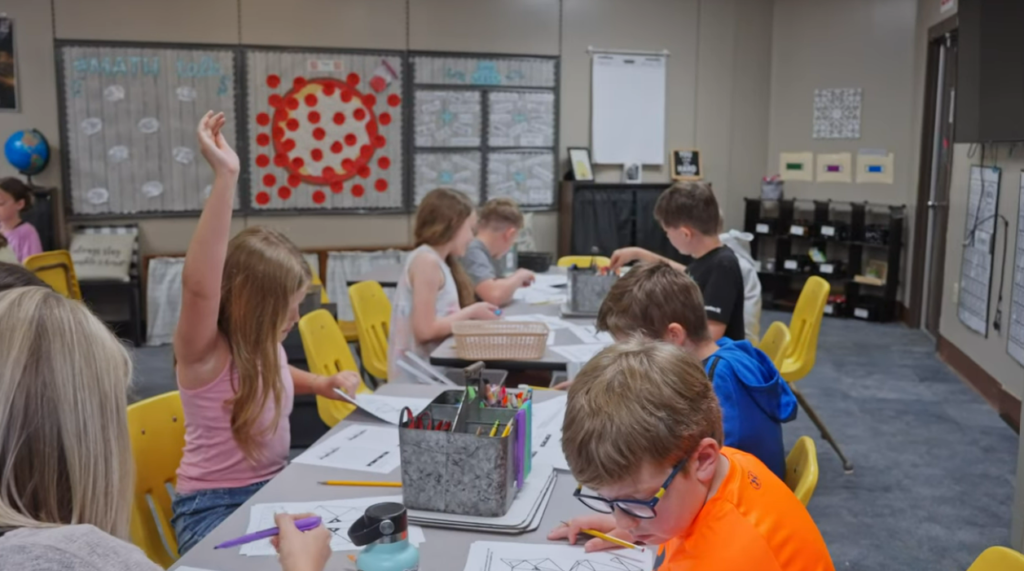
While the cafeteria down the hall gets ready for lunch service, fourth graders at Central Heights are busy making little circuits just after the morning announcements reverberate over the intercom. On a typical day in Sullivan County, “normal” frequently entails having abilities that seem remarkably advanced. Real-world training and robotics are viewed as necessary, not optional, in this district.
Although the Sullivan County Department of Education serves more than 7,700 kids, it seems to have a broader reach than that figure suggests. The schools have developed into a reliable starting point in an area where economic opportunity isn’t always spread equally. Students can directly pursue skills that are important, such as digital media production, IT training, welding certifications, and nursing certifications, through particularly creative programs like Career & Technical Education (CTE).
Over 70% of all high school graduates now finish a CTE concentration. That number has a purpose in addition to being amazing. The district has established itself as a builder of capability and confidence by placing a strong emphasis on experiential learning at a young age. These courses offer a toolset of real-world experience rather than merely theoretical preparation for students who aren’t sure if college is the right path for them.
Students in middle school participate in robotics courses that set the foundation. High school students obtain certifications that are genuinely accepted by employers. Technical learning feels organic rather than forced with this kind of layered exposure. It becomes evident that Sullivan wants to prepare children to go in whichever way they choose rather than trying to steer them in a specific direction.
Table: Key Facts About Sullivan County Department of Education
| Category | Detail |
|---|---|
| District Name | Sullivan County Department of Education |
| Location | Blountville, Tennessee |
| Superintendent | Dr. Chuck Carter |
| Student Population | Over 7,700 (K–12) |
| Number of Schools | 15 |
| Graduation Rate | Not officially published, but supported by high CTE participation |
| CTE Concentration | 73% of graduates complete CTE pathways |
| Programs Offered | STEM & Robotics, Career & Technical Education (CTE), Dual Enrollment, AP Courses |
| Official Website | www.sullivank12.net |
I just visited Sullivan East High and observed a student conducting phlebotomy on a training arm. The student was clearly proud, focused, and wearing gloves. Her senior year looked very different from mine when she turned to say she had already earned her OSHA safety certification.
I was more affected by that moment than I had anticipated.
Not only is the district’s strategy sensible, but it also works incredibly well to give pupils a sense of self-worth. Teachers are viewed as pathway planners rather than content delivery technologists. Their input is taken into account. Their contribution to the curriculum is important. As a result, there is a culture that prioritizes development without ongoing fatigue.
Additionally, initiatives like AP courses and dual enrollment are flourishing, guaranteeing that academic achievement will always be a part of the narrative. There are many of opportunities for college-bound kids to earn credits, pursue their academic interests, and investigate more complex subjects. The fact that these avenues exist alongside, rather than above, the career-focused ones, however, is especially commendable.
Bridges that feel incredibly sturdy have been constructed by Sullivan’s schools through strategic alliances with regional companies and business titans. These are continual discussions about worker need and emerging trends, not merely internship brochures distributed in May. Students are being taught how to lead, adapt, and contribute in addition to how to work.
Through the use of real-time data and community connections, the district has set itself up to continue providing education in a very efficient manner. Initiatives like “Ask Sully” lower barriers between parents and administration, events are effectively communicated, and the website is tidy. Such technologies are incredibly flexible and enhance transparency without adding extra procedures.
According to staff testimonies, the district feels more collaborative than hierarchical. Support, inclusivity, and a common goal are characteristics that are echoed by CTE leaders, music educators, and healthcare professionals. Many consider it to be the type of district that not only hires you but also values your work.
Of course, problems still exist. Finances are always limited. Transportation-related concerns necessitate ongoing adjustment. Additionally, schools continue to face pressure from test score criteria to pursue standardized objectives that might not be consistent with local values. Despite these limitations, Sullivan County has made the decision to focus on what it can control, making significant investments in initiatives that provide kids with real, long-lasting benefits.
The county’s motto, “Innovate. Transform. Inspire,” is not limited to mission statements or banners. It is demonstrated in classrooms where high school students are observing nurses at local clinics, building engines, and coding microcontrollers. In environments where children who previously felt invisible suddenly feel needed, it is very effective.
Its STEM and CTE programs have grown, and teacher retention has significantly improved since then. Families express greater levels of satisfaction. Graduates are obtaining credentials that enable them to pursue higher education or find work right away. These are changes in culture, not minor victories.
Sullivan County provides a third option in the current educational landscape, where many schools feel compelled to choose between test preparation and personal development. It’s a place where students are supposed to try, construct, question, and get ready for life, not just college.
The way this district functions has a subtle genius. It provides precisely what many communities are still looking for—purpose-driven education that is firmly grounded in the community while intentionally looking forward—without any gimmicks or exaggerated claims.
It serves as a reminder that alignment, rather than disruption, can sometimes result in the most significant transformation. When families, teachers, and kids are working together, even small resources may generate tremendous momentum.
Disclaimer
Nothing published on Creative Learning Guild — including news articles, legal news, lawsuit summaries, settlement guides, legal analysis, financial commentary, expert opinion, educational content, or any other material — constitutes legal advice, financial advice, investment advice, or professional counsel of any kind. All content on this website is provided strictly for informational, educational, and news reporting purposes only. Consult your legal or financial advisor before taking any step.
