

Neuroscientists have been studying how animals navigate mazes for decades, and their findings go far beyond left turns and rewards. They found groups of neurons that fire in identifiable patterns to assist direct future actions in addition to marking location. These are called navigation cells, and they are quite good at mentally and physically mapping out pathways.
The first cells to make headlines were place cells. These neurons, which John O’Keefe discovered in the hippocampus, fire when an animal takes up residence in a particular area. Grid cells in the entorhinal cortex, which fire in geometric patterns to measure direction and distance, were soon discovered by May-Britt and Edvard Moser. They work together to create a sort of internal GPS. However, their function doesn’t stop there.
In the last ten years, scientists have discovered that these identical cells might aid in thought processes. Not only should we be able to recall where we put our keys, but we should also be able to analyze concepts, balance alternatives, and make deliberate choices. Though we’re navigating options rather than highways, it’s quite similar to how we plan routes.
I recently seen a rodent stop at a fork in a virtual path during a lab demonstration. Its brain began to light up with neuronal activity at that precise instant, indicating that it was simulating both routes before making a decision. There was importance in that small hesitancy. It demonstrated how mental maps—structured frameworks directing behavior even in the absence of movement—may be used to inform decision-making.
This concept is especially novel since it reinterprets the way we think about thought. These cells monitor not just our current location but also our potential locations. We might be turning on the same circuits that animals use to locate food or shelter when we plan a project or envision a different result.
| Aspect | Detail |
|---|---|
| Core Discovery | Specialized neurons serve as internal “navigation cells” |
| Brain Regions Involved | Hippocampus and entorhinal cortex |
| Key Cell Types | Place cells, grid cells, head direction cells, border cells, speed cells |
| Primary Function | Construct cognitive maps used for spatial navigation and decision planning |
| Wider Role | Abstract decision-making beyond physical movement |
| Research Implications | Basis for understanding planning, memory, and AI navigation analogues |
| Modern Studies | Ongoing neuroscience experiments integrating cognitive map theory |
| Reference | Nobel Prize in Physiology or Medicine 2014 (O’Keefe; Moser & Moser) |
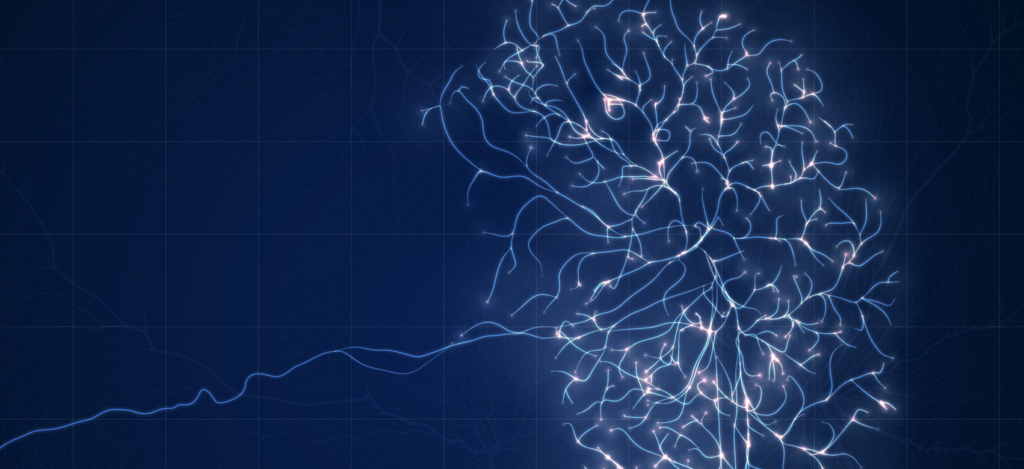
Scientists have discovered other cell types that contribute to this navigation network by closely examining these neurons. Head direction cells function similarly to an internal compass. When we are close to boundaries or edges, border cells react. We activate speed cells when we move or think faster. When combined, they produce a dynamic, real-time mental environment.
This approach is incredibly flexible and aids in converting physical space into an abstract structure. For instance, you may mentally map out the repercussions and assess your options when deciding between two professions or making travel plans; this process is similar to mapping out a route across uncharted area.
The brain becomes a sort of strategist by utilizing this system. Similar to how a chess player envisions moves ahead, it models situations before taking action. Though it may have developed initially to aid in food discovery, that skill today aids in goal-setting, relationship planning, and career planning.
The fact that this discovery opens up new avenues for the development of artificial intelligence is especially advantageous for researchers. Grid-like designs are being added to room-moving robots to enhance their decision-making. This approach adapts, in contrast to pre-programmed rules. It thinks forward rather than following predetermined routes.
These discoveries are helping neuroscientists better comprehend memory loss, navigational issues, and even planning-related challenges like those associated with dementia or ADHD. A person may forget not only where they are but also how to proceed with a decision if these cells are impaired.
Researchers are investigating the ways in which other parts of the brain, such as the prefrontal cortex, work in tandem with navigation cells through deliberate experiments. It calculates risk, gives emotional weight, and interprets the map. It’s as though the prefrontal cortex maps the path and the hippocampus sketches the terrain.
This interaction is quite effective. These areas build upon one another rather than operating independently, which could account for the persistence of cognitive maps in memory and imagination. They give us structure, which enables us to accurately mentally travel across time, practice activities, and simulate decisions.
Mimicking this architecture could be a breakthrough for early-stage AI systems. Machines would be able to halt, recalculate, and reroute based on flexible maps rather than strict directives. This change has the potential to significantly enhance the way autonomous systems engage with their natural surroundings.
It makes sense that remembering an event frequently feels like returning to a location because this brain map also overlaps with areas related to memory. For example, you might see the room, hear your footsteps, or even retrace your path to the elevator when you think back to your first day of work. In this sense, memory is a traversed space.
These brain patterns are now easier to observe because to significantly enhanced imaging technologies. Today, scientists can observe clusters of neurons firing in real time, providing a remarkably detailed picture of the brain’s workings. With every decision taken, it flickers across displays as evidence rather than speculation.
The way this research bridges disciplines is what many find exciting. This is where behavioral economics, psychology, neuroscience, and artificial intelligence converge. We might create better tools, treatments, and even society if we understand how humans make decisions.
The notion that our brains are filled with maps—maps we didn’t create but use on a regular basis—has a certain understated beauty. These maps do more than just show our location. They make suggestions on our next course of action.
We are now starting to read them out loud for the first time.
Disclaimer
Nothing published on Creative Learning Guild — including news articles, legal news, lawsuit summaries, settlement guides, legal analysis, financial commentary, expert opinion, educational content, or any other material — constitutes legal advice, financial advice, investment advice, or professional counsel of any kind. All content on this website is provided strictly for informational, educational, and news reporting purposes only. Consult your legal or financial advisor before taking any step.
