

A pulse of light passing through a fiber-optic cable twitched just a little bit somewhere off the coast of Ireland. It appeared to be noise to the majority of systems. However, that flicker had significance for academics who were paying close attention. It was the delicate, deep signal of an earthquake that was detected far below the surface of the ocean.
Instruments that were never designed for seismology are now extremely successful in capturing these moments, which were previously lost to the quiet of the ocean below. Our understanding of Earth’s movements has changed as a result of this subtle repurposing. Seafloor pressure sensors and fiber-optic cables are increasingly serving as unintentional scientific equipment, spanning far more areas with remarkably comparable accuracy to conventional instruments.
For many years, land-based sensors were the main focus of earthquake monitoring. However, beneath the oceans, 90% of seismic activity occurs. There were dark spots in tectonic study due to the lack of deepwater instruments. But now, sometimes intentionally, sometimes by mistake, that gap is closing.
Existing cable cables presented opportunities for researchers such as Bruce Howe in Hawaii and Giuseppe Marra in the UK. They started detecting seismic motion with startling accuracy by employing minute variations in the way light waves bend or twist, called polarization shifts. The fact that this approach didn’t necessitate the construction of costly deep-ocean labs or the installation of additional cables is very inventive. The infrastructure was already in place and bustling with online activity.
| Key Insight | Description |
|---|---|
| Discovery | Undersea sensors detected quakes occurring deeper than previously believed |
| Technology Used | Seafloor pressure sensors, fiber-optic cables, and laser phase tracking |
| Notable Locations | Cascadia Subduction Zone, Irish Sea, Japan, Pacific Rim |
| Scientific Challenge | Sensor drift, cost of underwater instruments, access to cable networks |
| Emerging Solutions | Self-calibrating sensors, polarization data from telecom cables |
| Supporting Agencies | U.S. Geological Survey, Caltech, University of Washington, Google |
| Potential Applications | Tsunami prediction, earthquake early warning, subduction zone mapping |
| Timeline & Developments | Key breakthroughs between 2017–2025, with pilot installations ongoing |
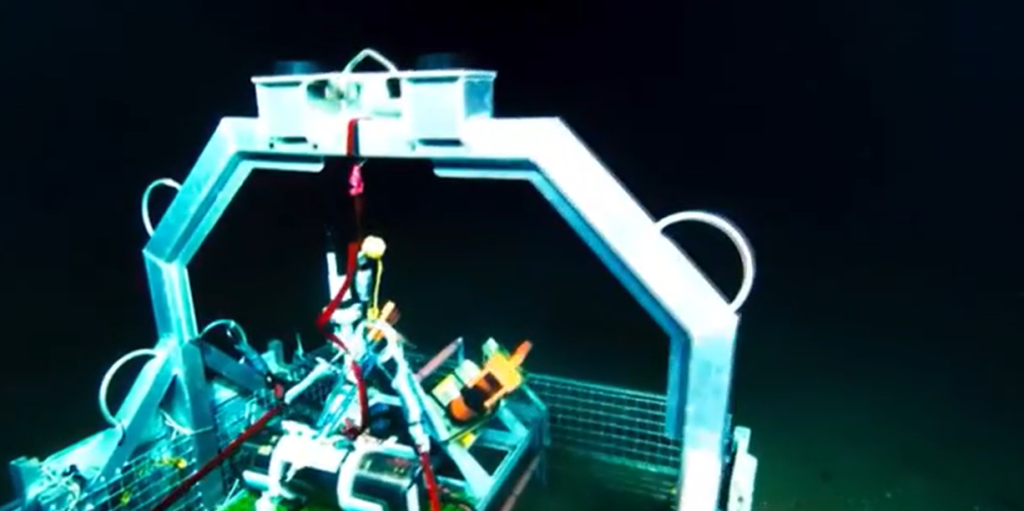
One notable finding was made in the Cascadia Subduction Zone. Scientists detected activity in areas previously believed to be too warm or malleable to fracture by placing self-correcting pressure sensors deep down the fault line. These earthquakes happened much deeper than conventional models had expected. We simply weren’t tuned to the correct frequency, so it seemed like the Earth had been communicating for years.
Similar methods were used in Japan to identify slow-slip events, which are earthquakes that develop gradually over days or weeks as opposed to seconds. These occurrences release energy and affect the course of large earthquakes, yet they don’t shatter glass or shake cities. Scientists can create more precise models and, perhaps, earlier warning systems by gaining a deeper knowledge of them.
This technology is developing more quickly than anticipated thanks to strategic alliances. Notably, Google has started making its fiber data available to academics, enabling them to track seismic signals as they flow over thousands of kilometers of undersea connections. These signals, which were formerly dismissed as unimportant, are now recognized as remarkably distinct tectonic motion indicators.
In order to link Lisbon with Madeira and the Azores, Portugal has already committed to include pressure sensors into its next-generation undersea cable network. This innovative move demonstrates how governments may integrate research into routine infrastructure without waiting for catastrophes to warrant funding.
Not all signals are seismic. Surprisingly, some of them are waves—actual ocean swells that mimic tremors and press down on wires. However, even those are worthwhile. We might observe significantly enhanced coastal weather predictions and more accurate tsunami models by examining such movements.
Traditional seismometer deployment at sea is still expensive. However, it is very inexpensive to use fiber-optic infrastructure that is already present throughout the seafloor. Additionally, it allows for widespread surveillance without the politics and delays associated with overseas deployments.
This combination of geology and telecommunications is especially advantageous. It makes it possible for governments, scientists, and even businesses to collaborate on projects that were previously exclusive to academic circles and research funds. The technology is really effective, the information is priceless, and there is a huge potential for societal benefit.
When I first read about this endeavor, my mind conjured up an underwater city with sensors, wires, and quiet observers instead of people or domes. These systems are telling us stories we’ve never heard before while they hum and blink nonstop. And every year they become more and more clear.
Cables installed to connect emails and video chats may provide some of the most revolutionary insights concerning earthquakes in the years to come, rather than labs or satellites. Earth has always been in motion. However, we are now learning how to listen for the first time.
Disclaimer
Nothing published on Creative Learning Guild — including news articles, legal news, lawsuit summaries, settlement guides, legal analysis, financial commentary, expert opinion, educational content, or any other material — constitutes legal advice, financial advice, investment advice, or professional counsel of any kind. All content on this website is provided strictly for informational, educational, and news reporting purposes only. Consult your legal or financial advisor before taking any step.
