

Not all the time do they roar. Some merely whisper. Despite their violent and uncommon reputation, volcanoes silently release gasses every day across fault lines, the ocean floor, and the land. The fact that we’ve underestimated the volume of their speech is becoming more and more obvious.
The output of volcanic CO₂ was much underestimated by older climate models, according to new equipment, especially those that detect low-temperature outgassing. Scientists have discovered emissions up to three times higher than previously thought by examining volcanic vents that were previously written off as insignificant. The balance isn’t drastically altered, but this improves our knowledge of Earth’s natural emissions, which is a crucial modification as climate models become more accurate.
According to researchers at the University of Cambridge, the cooling effects of sulfur dioxide were also misleadingly described. The way SO₂ behaves is very different from that of CO₂; it reflects sunlight away from Earth, forming a temporary cooling curtain. However, this bright side has been highlighted as well. We misinterpret brief dips in global temperature trends that could otherwise be early signs of change when their cooling influence is undervalued.
This misconception has minor but significant ramifications for atmospheric forecasting. The global carbon debate has always included volcanoes, though possibly more in theory than in reality. These emissions were believed by earlier models to be erratic, unpredictable, and eventually insignificant. Now, the data reveals differently. Incredibly active dormant volcanoes can consistently and regularly release gases through soil, steam, or underwater vents, especially those located beneath oceans or in seismically quiet areas.
KEY FACTUAL CONTEXT: VOLCANOES AND GREENHOUSE GAS ESTIMATES
| Aspect | Details |
|---|---|
| Core Claim | Volcanoes may emit more greenhouse gases than previously assumed |
| Human vs. Volcanic Emissions | Human activity still emits 60–100x more CO₂ annually |
| Key Gases Studied | Carbon dioxide (CO₂), sulfur dioxide (SO₂) |
| Updated Estimates | Newer tech finds CO₂ underestimated up to 3x from cooler volcanic vents |
| Cooling vs. Warming | SO₂ from volcanoes cools short-term; human CO₂ warms long-term |
| Model Weaknesses | Climate models often miss small-scale, frequent volcanic emissions |
| Scientific Consensus | Human activity remains primary driver of climate change |
| Notable Study | Chim et al., Cambridge, 2023; highlighted underestimated SO₂ impacts |
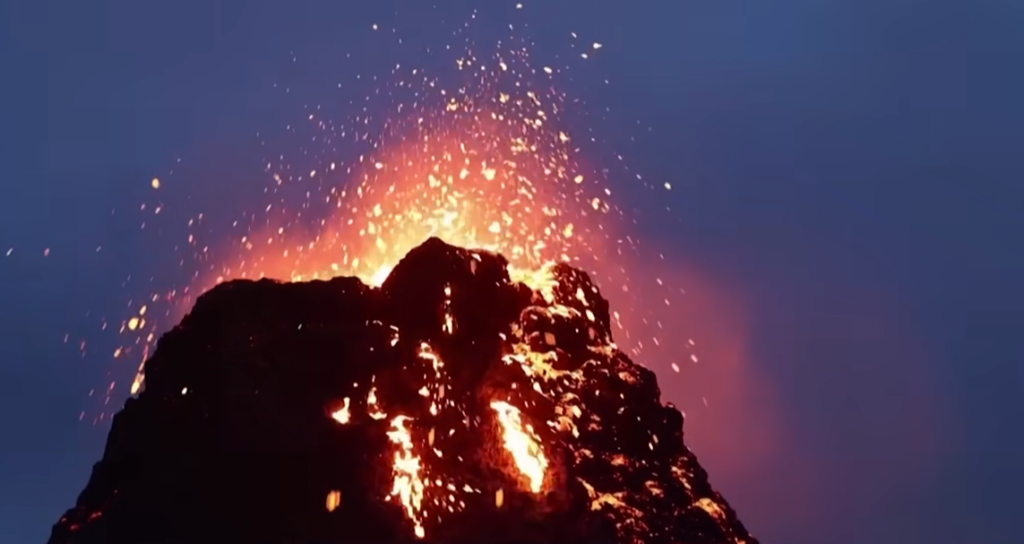
But that doesn’t mean we’re done. By all significant measures, human activity continues to be the primary cause of global warming. Volcanic production is at least sixty times less than the CO2 released by fossil fuels, changes in land use, and industrial activities. However, it’s important to comprehend each component of our climate system, particularly as the margin of error gets smaller.
They are using spectroscopic and satellite data to detect emissions that we previously overlooked. Low-level sources can be found with remarkable accuracy using these technologies, even in difficult-to-reach places like ocean ridges. Amazingly, several of these discoveries have come from previously thought to be dormant places. It was gentleness, not quiet, that was missed.
Large-scale volcanic activity averaging made sense for early-stage climate models. Now, however, these averages seem too basic. The high-drama eruptions that are the main focus of most climate discussions are not like the smaller, more frequent releases from innumerable tiny vents. They have a more subdued but steady rhythm, and their combined influence is beginning to appear in the statistics.
Years ago, I interviewed a volcanologist who told me that volcanoes only need to breathe in order to matter. They don’t need to erupt. It stayed with me. Loud moments are what we’ve been measuring. However, we should focus more on the slow, steady exhalations.
Recent years have seen a reexamination of the carbon budgets utilized in policy planning by the research community. The way that even minor changes in volcanic CO₂ calculations can alter long-term projections is very convincing. By improving the baseline, these recalibrations will probably increase the credibility of our reaction, but they won’t take the place of climate warnings.
Adding a more precise sense of urgency—not panic—is what makes this very helpful. Understanding how much is natural and how much is man-made informs more intelligent solutions, such as carbon taxes and discussions about geoengineering. Additionally, it guards against dishonest claims that exaggerate volcanic activity as a handy justification for postponing mitigation activities.
Scientific consensus has started to shift as a result of these findings thanks to strategic partnerships, such those between Icelandic universities and observatories of the European Space Agency. By improving upon current models, they increase the resilience and dependability of future forecasts rather than undermining them.
Climate scientists have significantly improved their classification of “quiet” volcanoes since the Manchester report was published in late 2025. This change recognizes that inaction is not the same as quiet. Data from soil gas monitors in Chile, Italy, and Indonesia showed that even dormant zones can contribute to consistent CO2 emission over decades. Emission mechanisms are now understood to go much beyond lava flows and crater rims.
Forecasters are creating more resilient scenarios by incorporating this revised data into next-generation climate simulations, which incorporate the unyielding reality of geology. Furthermore, volcanoes contribute CO2 long after the ash settles, even though they can sometimes provide a transient cooling phase through SO2 bursts.
The difficulty for independent climate modelers and medium-sized research institutions is frequently obtaining high-resolution volcanic gas data. The situation is starting to change, though. More people can now access this data, especially those who are researching regional emissions and microclimates, thanks to open-source repositories and common research methodologies. This information’s democratization is especially novel since it enables more academics to examine the things that are beneath their feet.
The discourse surrounding volcanic emissions is expected to change in the upcoming years from being contemptuous to perceptive. We are acknowledging a factor that we have long misinterpreted, but we are not looking at a competitor on par with human emissions.
Disclaimer
Nothing published on Creative Learning Guild — including news articles, legal news, lawsuit summaries, settlement guides, legal analysis, financial commentary, expert opinion, educational content, or any other material — constitutes legal advice, financial advice, investment advice, or professional counsel of any kind. All content on this website is provided strictly for informational, educational, and news reporting purposes only. Consult your legal or financial advisor before taking any step.
