

The way that scientists discuss sleep is changing. Time was nearly the only metric used to measure rest in the past. However, scientists are increasingly paying closer attention to how we sleep and what that quality can reveal. A concept you won’t yet find in textbooks is at the core of our investigation: “super rest.”
Super rest starts long before your head touches the pillow, as contrast to sleep, which occurs whether we plan for it or not. The parasympathetic nervous system, the body’s built-in brake pedal, is first activated in this profound neural healing state. When this system is working, the body slows down, cortisol levels drop, and cellular healing starts. It’s precisely manufactured tranquility, not just rest.
The stages of non-REM recovery, circadian rhythms, and REM cycles were the main topics of sleep science for many years. However, scientists are zooming out more and more. They have started to wonder: What if the preparation we make for sleep is just as restorative as the actual sleep itself?
Small rituals, like breathing gently into the diaphragm, gradually lowering the lights, or listening to soundscapes that replicate natural rhythms, can be extremely successful in bringing about this biological wind-down. These are not tricks. They have a quantifiable physiological effect: brainwaves slow, muscles relax, and heart rate variability stabilizes.
| Aspect | Details |
|---|---|
| Concept | “Super Rest” – a deeply restorative state linked to pre-sleep relaxation |
| Scientific Focus | Activation of the parasympathetic nervous system (PSNS) |
| Common Techniques | Deep breathing, yoga nidra, meditation, consistent sleep timing |
| Environmental Factors | Cool temperature, no screens before bed, dark & quiet space |
| Health Benefits | Faster recovery, reduced stress, emotional balance, improved cognition |
| Measurable Effects | Lower heart rate, calmer brainwaves, improved REM and deep sleep phases |
| Research Trend | Non-sleep deep rest (NSDR) practices being studied in medical settings |
| Popular Tools | Weighted blankets, white noise, sleep masks, guided audio apps |
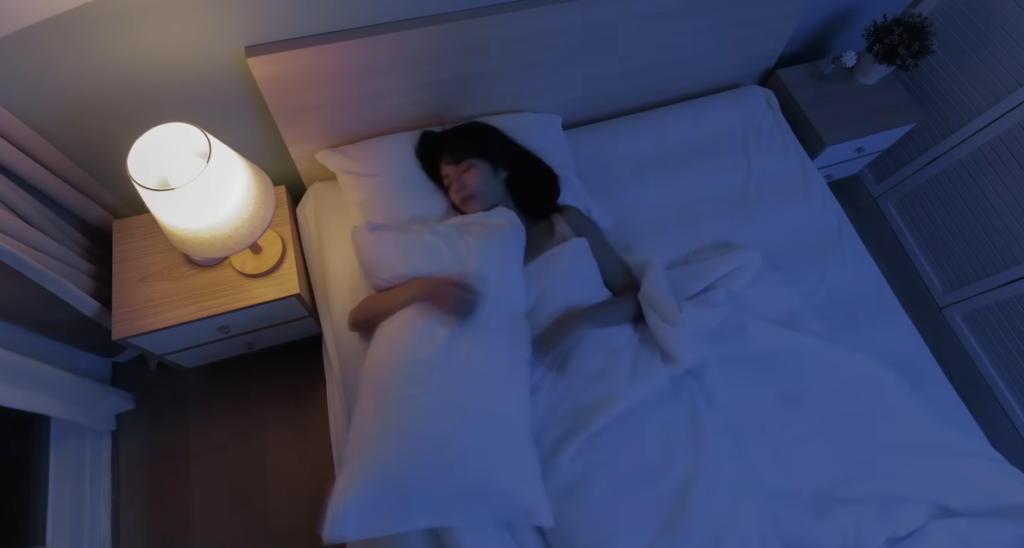
Consistently incorporating these practices has been linked to improved sleep quality and a sense of complete body clarity that is rarely experienced during regular sleep. This is starting to be recognized by researchers as a particularly novel mechanism that can improve the effectiveness of sleep rather than replace it.
After what felt like half-sleep for a month, I gave it a go. I was amazed at how quickly my thoughts vanished into silence after ten minutes of yoga nidra, a guided practice in which your body remains motionless while your mind remains conscious. My sleep wasn’t longer that night, but it was different. Somehow less interrupted, deeper, quieter.
Scientific research supports this. One of the main players in starting the parasympathetic reaction is the vagus nerve, which travels from the brainstem via the chest and abdomen. Methods such as gradual muscular relaxation and slow, nasal breathing directly activate this nerve, starting a series of events that effectively slow down the body.
What appears is a change in our understanding of relaxation. Sleep is not a prerequisite for super rest. Non-Sleep Deep Rest (NSDR), a technique that is currently gaining popularity in both medical research and business wellness initiatives, can help attain it during the day. It has been stated that Google executives utilize it in between meetings. It’s used by professional sportsmen before to training. Zoning in is more important than zoning out.
Super rest is becoming more and more popular due to its accessibility. Technology, pricey supplements, or a sleep tracker attached to your wrist are not necessary. A little environmental design, repetition, and intention are required. A quiet area, a consistent bedtime, an eye mask, or a white noise machine are all fairly inexpensive, but they have a disproportionately powerful effect.
As worry, overstimulation, and screen fatigue have increased, the body’s ability to enter a restorative state has diminished considerably. Super rest provides a way to regain that capacity by setting up intentional downtime times throughout the day rather than unplugging entirely.
This method has the added advantage of redefining rest as an active activity. Collapse at the end of a long day is not what this is. It involves precise unwinding. You have the option to let your neurological system to recover before falling asleep.
Additionally, pre-sleep rituals, like regular wind-down procedures and early light darkening, have been shown by sleep scientists to induce REM sleep far more quickly. They typically have fewer disturbances during the night and cycle through deep sleep stages more efficiently. According to some experts, even dreams seem more vivid, which suggests greater cognitive restoration.
This isn’t a miracle solution, of course. Medically diagnosed sleep problems and chronic insomnia still need to be treated and monitored by professionals. Super rest, however, provides a surprisingly scalable answer for the great majority of people who suffer from fragmented or short sleep.
Furthermore, it doesn’t take hours. Small windows of intentional recuperation actually account for a large portion of its power. A simple breathing exercise in the middle of the day, a 15-minute guided audio, or simply sitting quietly with no plans will all help your brain switch gears faster at night.
It represents a subdued revolt in culture. Rest has long been denigrated and portrayed as incompetence or laziness. But things are changing. As mental health and burnout receive more attention, rest is being reframed as a tactic that is emotionally calming, medically important, and highly effective rather than as an indulgence.
As more people use apps and smart devices to monitor their sleep quality, they are beginning to see directly how pre-sleep behaviors impact total recuperation. The feedback loops are obvious: sleep better, wake up sharper, and wind down earlier.
The most persuasive realization is that super rest encourages better sleep rather than more sleep. And in a culture that seldom pauses, that little difference may serve as the cornerstone of a better, more long-lasting approach to healing.
For now, the lesson is straightforward: we don’t have to wait until we crash if we want to perform better, think more clearly, and feel more resilient. With complete faith in the long-term benefits, we may begin incorporating super rest into our days in a calm, regular manner.
Disclaimer
Nothing published on Creative Learning Guild — including news articles, legal news, lawsuit summaries, settlement guides, legal analysis, financial commentary, expert opinion, educational content, or any other material — constitutes legal advice, financial advice, investment advice, or professional counsel of any kind. All content on this website is provided strictly for informational, educational, and news reporting purposes only. Consult your legal or financial advisor before taking any step.
