

Clair Obscur: Expedition 33 had a debut that most independent developers can only dream of: fan adulation, critical praise, and an eye-catching visual identity that won over even the most doubtful reviews. The game received laudatory comparisons to genre-defining titles because of its daring art direction and its rhythmic, poetry-driven fighting system. However, an unforeseen event interrupted its celebration just as its moment of triumph was about to occur.
It wasn’t a studio controversy or a flaw in the game. Before final designs were put into practice, it was hidden in early-stage textures—placeholder assets—that were silently produced using generative AI. When questioned, the game’s creators, Sandfall Interactive, were open and honest. They verified that certain environmental components had initially employed AI to fill in gaps during development. Before the game was released, these were later swapped out for unique, hand-made artwork.
That degree of candor was admirable to some. However, it became the reason for exclusion from the Indie Game Awards.
The Awards committee made reference to its stringent zero-tolerance policy on AI-generated content, making it abundantly evident that generative AI cannot be used in any portion of a project that is submitted, even if it is included in the finished version. Although that decision might appear inflexible, it captures a major conflict in the creative industries: where do we draw the boundary between authorship and assistance?
Table: Key Facts About the Disqualification
| Detail | Information |
|---|---|
| Game Title | Clair Obscur: Expedition 33 |
| Developer | Sandfall Interactive |
| Publisher | Kepler Interactive |
| Disqualified From | Indie Game Awards 2025 |
| Reason for Disqualification | Use of generative AI for placeholder assets |
| Affected Awards | Game of the Year, Best Debut Game |
| Final Outcome | Awards reassigned to Blue Prince and Sorry We’re Closed |
| Credible Reference | Game Rant Coverage |
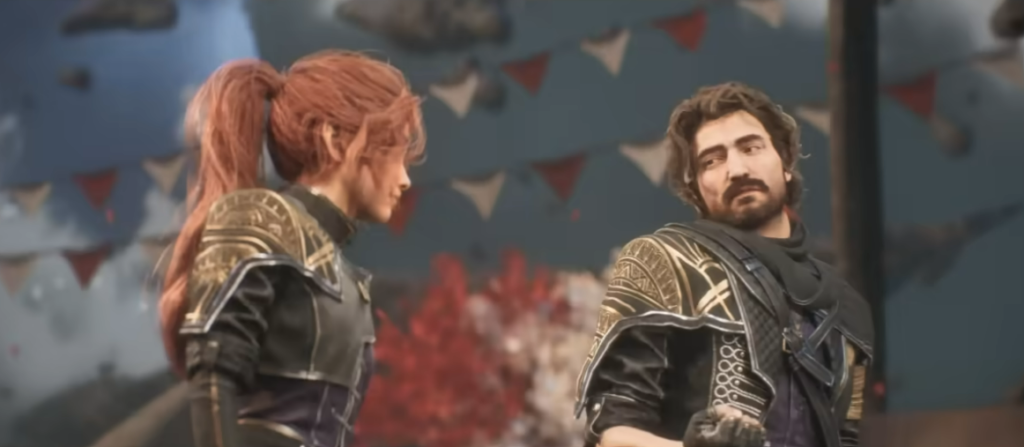
Expedition 33 lost two significant awards—Game of the Year and Best Debut Game—after the Awards discovered the early AI use. Instead, they were given to Blue Prince and Sorry We’re Closed, two games that had previously gone unnoticed but were suddenly in the public eye. In an embarrassing turn of events, those awards were accepted retroactively, leaving creators and fans to question whether justice had been done.
Similar complaint was previously addressed by Sandfall’s production director, François Meurisse, during a post-launch controversy when players observed AI-like textures in the background of some levels. He gave a very clear response. The team immediately mocked up prototypes using AI, but they were quickly replaced. They saw it as a tool rather than a crutch.
That openness could have been a double-edged sword in retrospect. Although fans valued the candor, it offered the precise proof required to uphold the rule.
The industry had previously dealt with a gray area. This moment felt especially illuminating in a year when generative AI tools are being incorporated into creative workflows more and more. Interestingly, the AI in question was never included in the final version. It was merely a time-saving development shortcut, not a replacement for creativity.
The Indie Game Awards, however, remained unwavering. They obviously perceive any AI contribution as a possible danger to the policy’s goal of protecting creative integrity.
What about context, though? Isn’t there room to acknowledge timing, transparency, and intention? Some developers contend that this stringent implementation hinders innovation, especially for small-scale independent studios. Placeholder assets have always been there; AI is just the newest, fastest technique to create them.
I’ve watched the debate play out online, and it’s been remarkably consistent across platforms. Purists worry that AI will someday take the place of human interaction. Conversely, pragmatic developers view AI as a short-term tool that is especially useful for non-final components or during stressful times. The latter appears to be the case with sandfall.
The community is still split. Many fans have expressed their dissatisfaction with the Awards’ response, not Sandfall, but with the studio’s silence after the disqualification. The placeholder error did not take away from the artistic quality of the game. In fact, it demonstrated how much the finished product was able to distance itself from those early shortcuts.
Many people find it particularly frustrating that the conversation was drastically cut down. The focus moved from praising a game that creatively combined mechanics and story to highlighting an administrative policy. A triumph became a warning story.
However, there is a bright side. A long-overdue discussion in the indie scene has been triggered by the occurrence. These days, developers are asking for very explicit standards on what is acceptable throughout the development process. Does a title actually lose its eligibility if early AI use is completely replaced? Or is subtlety possible?
Whatever one’s thoughts, one thing is certain: Clair Obscur: Expedition 33 has left its mark on independent history. Not because of its shortcomings, but because of the uproar it caused and the studio’s unvarnished handling of it. The circumstance revealed a flaw in both policy and the way we prioritize process over product.
It is probable that policies may change in the upcoming years. More developers will pose challenging queries. Additionally, it is hoped that context would influence decisions rather than just checkboxes.
Disclaimer
Nothing published on Creative Learning Guild — including news articles, legal news, lawsuit summaries, settlement guides, legal analysis, financial commentary, expert opinion, educational content, or any other material — constitutes legal advice, financial advice, investment advice, or professional counsel of any kind. All content on this website is provided strictly for informational, educational, and news reporting purposes only. Consult your legal or financial advisor before taking any step.
