

There are some lessons that just cannot be contained within four walls. Outside of the classroom, where sunlight, movement, and curiosity naturally combine to foster creativity and focus, many educators are finding that the most amazing learning occurs. Outdoor education is a particularly successful strategy that changes how kids relate to information and to one another; it’s not a fad.
The Harvard Graduate School of Education has conducted incredibly clear research showing that outdoor learning not only improves academic performance but also dramatically lowers anxiety and increases motivation. Originally intended to keep schools open safely, the National COVID-19 Outdoor Learning Initiative ended up serving as a catalyst for a complete rethinking of education. Green Schoolyards America co-founder Sharon Danks called outdoor learning “an incredibly versatile and highly efficient strategy for the future.”
The advantages are both profound and useful. Instead of being distracted by fluorescent lights or cramped chairs, children who study outside move, observe, and engage with one another. Knowledge retention is improved by this sensory engagement. A study from the American Institutes for Research showing improved problem-solving and science scores after outdoor programs supports teachers’ reports that students who return indoors after outdoor lessons are calmer and noticeably more focused.
Key Insights About Outdoor Learning and Child Development
| Category | Information |
|---|---|
| Focus | Exploring how children learn more effectively through outdoor and experiential education |
| Key Benefits | Improves focus, creativity, mental health, physical well-being, and social skills |
| Leading Research Institutions | Harvard Graduate School of Education, Swansea University, Teachers College Columbia University, NIH |
| Educational Models | Outdoor classrooms, nature-based learning, experiential field programs |
| Notable Supporters | Sharon Danks (Green Schoolyards America), Craig Strang (Lawrence Hall of Science), Charlotte Todd (Swansea University) |
| Countries Leading Adoption | Sweden, Germany, United States, South Korea, and the Netherlands |
| Core Challenges | Funding, assessment limitations, lack of teacher training, urban accessibility |
| Long-Term Benefits | Improved academic performance, reduced anxiety, stronger environmental stewardship |
| Societal Impact | Encourages empathy, resilience, and connection to community and environment |
| Reference Source | https://www.weforum.org |
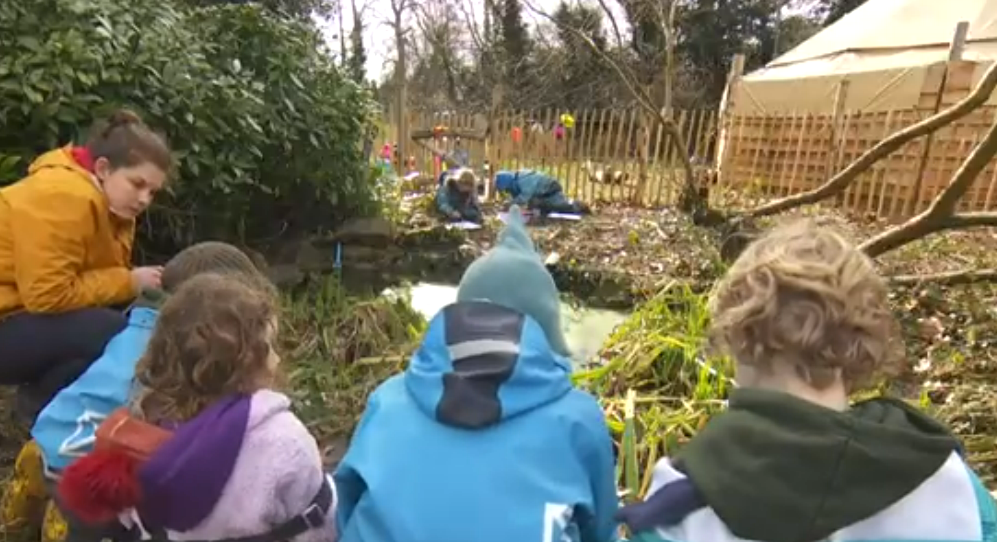
Swansea University researcher Charlotte Todd discovered that children who learn outside frequently exhibit remarkably comparable improvements on both academic and emotional tests. She observes, “They feel more free, more expressive, and more confident.” Outdoor instruction improves memory, social skills, and self-esteem, according to her team’s research. Although the academic outcomes were better, students said that outdoor learning felt more like adventure than school.
The notion that learning is enhanced by movement is not new. It has long been recognized by neuroscientists that exercise improves focus and memory by increasing dopamine and oxygen flow to the brain. This process is merely amplified by outdoor education. Teachers can create memorable experiences by incorporating natural exploration into their lesson plans. Textbooks cannot match the context provided by a math class that measures tree heights or computes the area of a playground.
The psychological effect is just as strong. According to NIH studies, being outside improves self-worth, lowers cortisol levels, and lessens anxiety. This can be especially helpful for kids who struggle with attention issues or sensory issues. They can move, observe, and learn without feeling restricted in an environment that is both forgiving and stimulating when they are learning outdoors.
Outdoor learning has been reported to reenergize teachers. It was “a refreshing return to why many became educators in the first place,” according to Craig Strang of the Lawrence Hall of Science. Teachers rediscover joy and creativity in lessons that feel alive rather than scripted, and it’s not just the students who benefit. Students mimic the curiosity and vigor they witness modeled because this enthusiasm is infectious.
With entire early education systems based on outdoor classrooms, nations like Sweden and Germany have long been at the forefront. Similar programs in the US and the UK have been influenced by their forest schools, where kids explore and learn throughout the year. Districts have set up hundreds of outdoor classrooms with basic seating and portable supplies, even in colder climates like Maine. “If restaurants can turn sidewalks into dining spaces, schools can certainly turn playgrounds into classrooms,” stresses Sharon Danks.
Students who frequently struggle indoors can be reached with remarkable effectiveness thanks to the inclusive nature of outdoor learning. For instance, shared activities that foster natural communication are beneficial for English language learners. In a similar vein, movement and sensory engagement facilitate information processing for kids with special needs or ADHD. In outdoor environments, collaboration takes the place of hierarchy, allowing each student to participate.
The difference has also been noticed by parents. Children who took part in outdoor programs were more talkative, less nervous, and much more motivated to go to school, according to families in several studies conducted throughout Europe and North America. These findings are consistent with research from Columbia University’s Teachers College, which found that outdoor education increases students’ sense of community, empathy, and curiosity.
Additionally, outdoor education adds a crucial environmental component. Children naturally respect preservation when they observe ecosystems firsthand, whether it be by identifying local species, studying soil, or counting insects. Teachers refer to this method as “learning through stewardship,” which encourages environmental responsibility while strengthening math and science abilities. This reconnection seems extremely important in a generation that is becoming more and more cut off from nature.
Beyond academics, there are long-term advantages. Research continuously demonstrates that kids who learn outside are more adept at solving problems, more flexible, and noticeably more sympathetic to their peers. These attributes are in line with what employers now refer to as “future-ready skills,” which include emotional intelligence, creativity, and teamwork. In essence, outdoor education develops the kind of thinkers that contemporary society sorely needs.
But rather than being philosophical, the challenges are practical. Lack of outdoor space, inadequate funding, and challenges in measuring results are all mentioned as obstacles by many schools. However, creative teachers are still coming up with answers. Using planters and shade canopies, some schools have turned their parking lots into green spaces. Others set up “walking classrooms,” in which pupils study while touring their neighborhoods. These adaptable models are incredibly successful, demonstrating that outdoor learning can flourish anywhere, not only in wealthy or rural areas.
The students themselves make what is arguably the strongest case. Children consistently rate outdoor classes as “fun,” “freeing,” and “motivating” in surveys conducted across several programs. Months later, they recall lessons as narratives rather than assignments. “When we learn outside, it doesn’t feel like learning — but I remember everything,” one student put it simply. That sentiment perfectly expresses the goals of education: to be memorable, engaging, and human.
Disclaimer
Nothing published on Creative Learning Guild — including news articles, legal news, lawsuit summaries, settlement guides, legal analysis, financial commentary, expert opinion, educational content, or any other material — constitutes legal advice, financial advice, investment advice, or professional counsel of any kind. All content on this website is provided strictly for informational, educational, and news reporting purposes only. Consult your legal or financial advisor before taking any step.
