

In the past, Finland’s educational system was hailed for its equality, inventiveness, and serene efficiency, making it a silent symbol of balance. However, cracks are beginning to appear beneath its calm exterior. Students are becoming more distracted, exhausted, and unmotivated, teachers are overworked, and test scores are declining. The “education miracle” that was once heralded now seems more like a promise that is unable to keep up with its own mythology.
The nation’s steep decline started out slowly but steadily. Finland’s students have fallen significantly in the OECD’s PISA rankings since they peaked in the early 2000s. The decline has been especially sharp in mathematics, going from first to twentieth. Education ministers acknowledge that performance has significantly declined and have called the trend “extremely concerning.” A deeper change in priorities, culture, and identity within the Finnish classroom is reflected in the statistics.
Finland has long taken pride in its teachers, but their morale has significantly suffered. Teaching, which was once regarded as a dream job, is now associated with fatigue and annoyance. In comparison to other European nations, the workload has increased and salaries have remained stagnant. In addition to teaching, many teachers balance administrative tasks and provide emotional support, which exhausts them. A career that was once thought of as a calling is gradually becoming a survival tactic.
Support systems have been drastically cut due to budget cuts. Since 2012, more than €2 billion has been taken out of education, which has resulted in fewer teaching assistants and larger class sizes. Maintaining the well-known individual-care approach—every student supported, every child known—is now very challenging. Teachers acknowledge that “individualized attention” is no longer a practice but rather a catchphrase. Ironically, inequality is produced when equality is overextended.
| Aspect | Detail |
|---|---|
| Issue | Declining performance in reading, math, and science since 2010 |
| Major Concern | Widening gender gap; boys perform significantly lower in reading |
| Teacher Challenges | Burnout, underpayment, staff shortages, and workload pressure |
| Integration Problem | Immigrant students face barriers in language and inclusion |
| Digital Disruption | Overuse of mobile devices and reduced focus on basic skills |
| Mental Health | Increased anxiety and depression among students, limited support |
| Funding Cuts | Over €2 billion cut from education since 2012, affecting quality |
| Gifted Students | Lack of advanced programs or challenges for top performers |
| Educational Equality | Growing gap between affluent and low-income families |
| Source | OECD PISA Reports & Per Capita Media (https://www.per-capita.co.uk) |
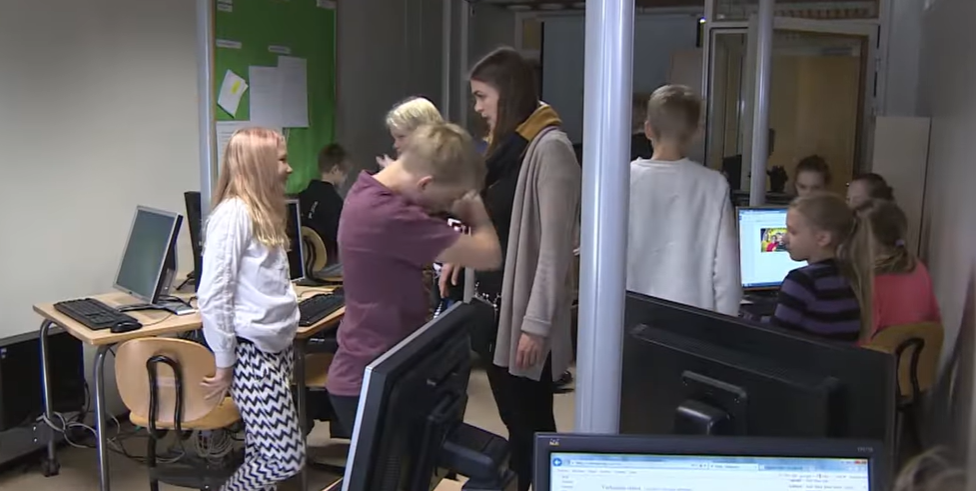
Once accepted as a progressive teaching tool, technology has created a whole new set of problems. Tablets and laptops are now commonplace in classrooms, frequently taking the place of books and practical exercises. Critics contend that reading comprehension and focus have been impaired by this digital overload, especially in boys. Teenagers in Finland typically get less than eight hours of sleep, spend excessive amounts of time online, and have trouble focusing for extended periods of time. “We gave them iPads, but we took away their imagination,” one educator said.
One of the main characteristics of Finland’s educational crisis is the gender gap. In reading, girls routinely perform better than boys; almost twice as many of them achieve top-tier proficiency. Every year, boys who are disinterested in reading and preoccupied with digital content lag farther behind. The phenomenon, which psychologists refer to as a “silent divergence,” poses a threat to future equality in both professional and higher education settings.
Another issue of growing concern is the integration of immigrants. Finland’s once homogeneous classrooms are now under threat from the country’s growing diversity. Early education is especially difficult for students from immigrant backgrounds because they frequently arrive lacking in fluency in Swedish or Finnish. Many are put in simplified language classes that hardly ever get them ready for more advanced coursework. Parents talk about feeling excluded from a system that was intended for consistency rather than flexibility. Finland’s most cherished principle, equality, has grown more and more conditional.
These structural flaws are exacerbated by mental health conditions. Students’ levels of anxiety and depression have significantly increased. The number of young female suicides rose by 20% between 2020 and 2021. Teachers are now acting as informal therapists, pushing their emotional boundaries due to a lack of school counselors. Quietly but significantly, Finland’s reputation for excellence has been damaged by the pressure to perform academically.
Even the structure of education has evolved. There has been strong opposition to the “open-concept” classroom movement, which aims to promote teamwork. Noise, chaos, and lack of focus were the main reasons given by 90% of teachers who responded negatively to the survey. Although the concept is contemporary, the result seems ineffective. Instead of being a continual source of distraction, education should encourage peaceful inquiry.
Part of what makes Finland’s struggles so remarkably symbolic is that, in spite of these setbacks, the country continues to perform at a high level worldwide. Fatigue, not failure, is the system’s problem. It’s more difficult to maintain excellence than to attain it. Finland, which was once a leader in innovative, student-centered education, is now up against the challenge of modern adaptation: striking a balance between equality and excellence, creativity and discipline.
Thinkers and educators who are celebrities have compared this industry to others that are going through similar changes. According to Sir Ken Robinson, creativity flourishes in structures rather than outside of them. His viewpoint strikes a deep chord with Finland’s current predicament. Classrooms have become open experiments with uneven results due to an excess of freedom. Once thought to be restrictive, structure may now be the missing component.
It is also impossible to overlook the social aspect. In a concerning reversal of Finland’s core values, students from wealthier families are performing better than those from lower-income households. Under social pressure, education—once the great equalizer—is beginning to show cracks. Policymakers understand that improving academic performance is only one aspect of reforms; another is rebuilding community, parent, and school trust.
Disclaimer
Nothing published on Creative Learning Guild — including news articles, legal news, lawsuit summaries, settlement guides, legal analysis, financial commentary, expert opinion, educational content, or any other material — constitutes legal advice, financial advice, investment advice, or professional counsel of any kind. All content on this website is provided strictly for informational, educational, and news reporting purposes only. Consult your legal or financial advisor before taking any step.
