Joe Holloway remembers how teachers were hailed as national heroes in the early years of the pandemic. The applause was sincere and the gratitude felt real. However, that fleeting moment of gratitude has since vanished into silence, to be replaced by exhaustion, scrutiny, and a relentless pace that has emotionally depleted many educators. What was once a purpose-driven career has evolved into one that is characterized by survival.
As a result of laws, technology, and expectations that have significantly increased access to education while also undermining those who provide it, teacher burnout has emerged as the unstated cost of progress. Burnout is a type of depletion, a gradual disintegration of the passion that once energized classrooms, and it is not just a sign of stress. Every legislator, parent, and principal should be alarmed by the fact that nearly half of K–12 teachers now say they feel burned out frequently or always.
It’s an economic problem, not just an emotional one. Districts invest millions in finding and retraining replacement teachers when they depart. Every vacancy results in diminished mentorship, lost experience, and halted student advancement. In terms of finances, burnout is a silent, ongoing, and expensive drain on public education budgets. Burnout-related turnover can increase district spending by as much as 20% a year, according to the Southern Education Foundation. However, the true cost is measured in discouraged mentors and disengaged students rather than in monetary terms.
| Category | Details |
|---|---|
| Full Name | Joe Holloway |
| Profession | Social Studies Teacher and Union Advocate |
| Institution | East Hampton Public Schools, Connecticut |
| Known For | Speaking publicly on teacher burnout and systemic pressures in education |
| Key Role | Member of the Connecticut Education Association (CEA) advocating for teacher wellness |
| Focus Areas | Mental health, workload reform, teacher retention |
| Recognition | Noted contributor to educator well-being initiatives |
| Reference Link | National Education Association |
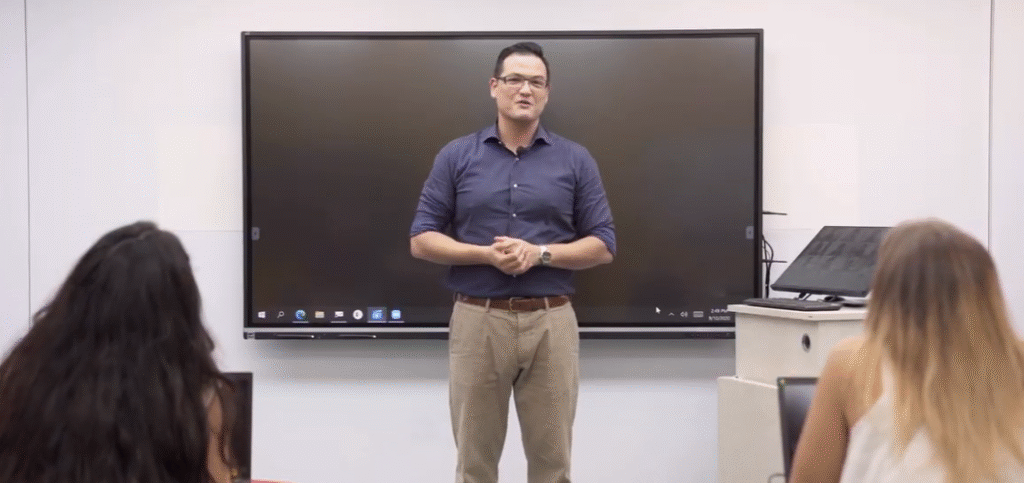
“There’s just one more initiative, one more responsibility, one more demand every year,” Holloway says with weary precision as he recounts his experience. Lesson plans, behavioral reports, technology updates, and emotional support are just a few of the tasks that are constantly layered on top of one another, creating an invisible burden. Researchers from Auburn University discovered that new learning management systems, which were supposed to make work easier, frequently had the opposite effect. They introduced new systems in place of replacing outdated ones, leaving teachers to juggle numerous digital tools without any downtime.
In a moving statement, Connecticut language teacher Elsa Batista said, “We love our profession, but it’s exhausting.” Her statement reflects the silent fatigue that thousands of people nationwide are experiencing: “We need help in our classrooms — and it’s not coming.” Teachers now serve as safety nets for social and emotional problems that are well outside the purview of their jobs. They are remarkably patient in handling conflict, counseling students, and absorbing trauma, but they hardly ever get the same compassion in return.
According to a 2025 report by the National Education Association, 78% of teachers had thought about leaving their jobs since the pandemic. Overwhelming workloads, unruly student conduct, a lack of administrative support, and stagnant pay were all remarkably similar causes. It would be difficult to deal with each of these factors alone; when combined, they create a pressure cooker that has become especially harmful. Teachers’ burnout is caused by the system’s refusal to recognize their limitations, not by a lack of resilience.
The crisis is further compounded by the moral aspect of burnout. Doris Santoro, a professor at Bowdoin College, contends that educators are not just worn out but also disheartened. Being held to impossible standards while observing creativity and autonomy evaporating is a systemic betrayal, not a sign of personal weakness. Purpose wanes when bureaucracy and passion clash. According to Nicholas Cream, president of the Holyoke Teachers Association, “we went from being celebrated to being scrutinized.” “There is a checklist for every innovation.”
One of the most urgent issues nowadays is student behavior. Post-pandemic classrooms are louder, more distracted, and much more difficult to control, according to teachers. According to a Pew Research study, even in cases where there are restrictions, 72% of high school teachers believe that cellphones cause significant disruptions. Disconnecting is now the issue rather than just being distracted. While teachers are left to enforce rules rather than encourage curiosity, students find it difficult to concentrate. Cream acknowledges, “Instead of teaching, we’re policing screens.”
There is a huge emotional cost. Teachers take a keen interest in their students’ lives, sharing in their personal hardships and acknowledging even the smallest successes. This emotional work eventually turns into unpaid caregiving. Compassion fatigue occurs when support networks break down. It’s the silent weariness of having too much concern for too long. Teachers continue to show up despite their weariness, which is evidence of their extraordinary sense of duty.
Recently, celebrities like Michelle Obama and Viola Davis have expressed their admiration for teachers’ perseverance and called for systemic respect. Teaching, according to Davis, whose parents were teachers, is like “carrying invisible backpacks filled with other people’s worries.” This metaphor works because it’s accurate. Teachers bear the emotional burden of whole communities, frequently without recognition or respite. Obama made this point very clear in a recent speech at a summit on public education: “We can’t expect inspiration from people who feel unseen.”
The effect is not limited to staff rooms. Students also sense it. The weariness of a burned-out teacher permeates the classroom environment. Curiosity wanes, patience wanes, and lessons lose their luster. Burnout has been directly linked to decreased student engagement and deteriorating test scores, according to research from the University of Chicago. It’s energy depletion, not apathy. The kids in the room will unavoidably mimic the adults’ lack of motivation.
Disclaimer
Nothing published on Creative Learning Guild — including news articles, legal news, lawsuit summaries, settlement guides, legal analysis, financial commentary, expert opinion, educational content, or any other material — constitutes legal advice, financial advice, investment advice, or professional counsel of any kind. All content on this website is provided strictly for informational, educational, and news reporting purposes only. Consult your legal or financial advisor before taking any step.